Advice written for marketing teams does not survive contact with a business where the owner also does everything else. A realistic small business social media workflow assumes an hour or two a week and is designed to still be running in a year.
One platform, done properly
Spreading limited time across four platforms produces four neglected accounts. Choose the one where your customers actually are, do it consistently, and ignore the rest until there is genuine capacity to add another.
Choose by where customers already are rather than by which platform is discussed most. For many local businesses that is a page people check for hours and updates, not a feed requiring daily content.
The routine
- Pick one platform and one realistic cadence.
- Batch: one session a month producing everything.
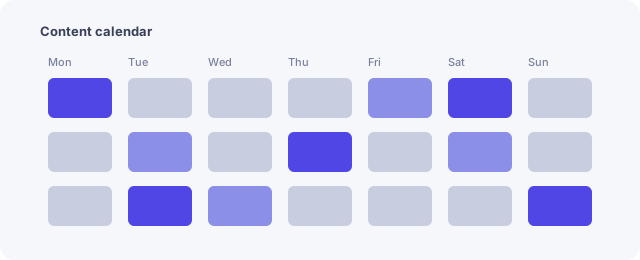
- Keep three or four recurring post types so nothing starts blank.
- Schedule in advance, leaving one slot for anything timely.
- Check messages at fixed times rather than constantly.
- Keep the business information accurate — it matters more than posts.
- Review quarterly whether it is worth the time.
Accurate information beats content for most small businesses. Correct hours, a working phone number and current pricing serve more customers than a month of posts, and they take minutes to check.
Be honest about what it delivers
Social presence for a small business is usually a support and reassurance channel rather than a primary source of customers. Judged as a sales channel it will disappoint; judged as the place people check you are open and responsive, it earns its modest time cost.
Give any approach a fair trial and then decide honestly. Three months of consistent effort tells you something; three weeks does not, and neither does a year of sporadic activity. Reviewing on a schedule prevents both premature abandonment and indefinite drift. Related routines sit in the page content workflow and the budget planning guide.
Common questions
How much time is realistic?
One to two hours a week, most of it batched into a single monthly session.
Which platform should be chosen?
Where your customers already are. Ask a few of them rather than guessing.
Is daily posting necessary?
No. Weekly or fortnightly consistency serves a small business better than a burst followed by silence.
Should posting be outsourced?
Possibly, but keep the message replies in-house. Customers ask specific questions only the business can answer.
What matters most?
Accurate information and answered messages. Content comes after both.
When should a second platform be added?
Only once the first runs without effort, and only if customers are visibly asking for it. See about.
Does a small business need a content calendar?
A simple list of what is going out this month is enough. Anything more elaborate consumes time that would be better spent on the posts themselves.
Related guides
More on this topic from the same section: