A report that a partner has to rewrite before sending is not white-label. Practical white label reporting produces something they can present unchanged, which means neutral branding and language that does not assume who is reading it.
Neutral by default
Remove your own branding from the template, including the places it hides: file names, document properties, chart headers and footer text. Partners notice these, and finding one after sending a report to their client is exactly the failure the arrangement was meant to prevent.
Write in language that works whoever presents it. Avoid "we" where it implies your team specifically, and avoid references to internal processes the end client has never heard of.
What the template contains
- Summary: what happened, why, what changes.
- Delivered against planned.
- A fixed metric set over identical windows.
- Commentary in plain language, free of internal jargon.
- Decisions for the next period.
- Limitations — what the figures cannot show.
- No branding, file-name traces or document metadata identifying you.
Keep the metric set fixed even where a particular period looks unflattering. Partners rely on consistency to have sensible conversations with their clients, and a template that changes shape undermines that.
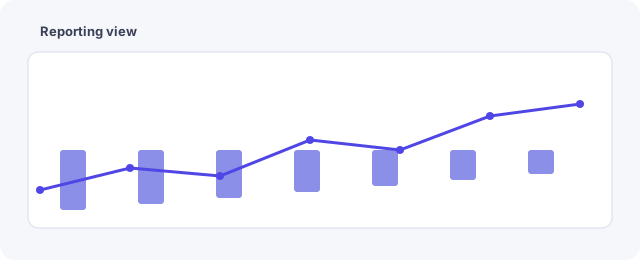
Honesty travels further than optimism
It is tempting to present partner-facing reports favourably, since the partner is your customer. That reliably backfires: they repeat your framing to their client, and if it does not survive scrutiny, the credibility lost is theirs as well as yours.
Report shortfalls plainly with the reason and the response. A partner who trusts your reporting will defend you to their client; one who has been embarrassed once will check everything from then on. Delivery structure sits in the white label social media workflow, and formats in the monthly marketing report workflow.
Common questions
Should partners be able to edit the report?
Supply an editable version. Locked formats force them to rebuild it, which defeats the purpose.
How much detail should be included?
Summary plus attached detail. Partners vary in how much their clients want.
Should figures be interpreted?
Yes. Raw numbers push the analysis onto a partner who has less context than you do.
What about comparisons to other clients?
Never. Sharing anything identifiable about another account breaks confidence immediately.
Where does branding hide?
File names, document properties, chart titles, template footers and image metadata. Check all of them.
How often should the template be reviewed?
Twice a year, and whenever a partner asks for the same change more than once. See about.
Should the report name the platforms used?
Yes. Those are facts the end client can verify, and omitting them looks evasive rather than discreet.
Who answers questions about the report?
The partner, using notes you supply. That keeps the arrangement intact and avoids two people giving different explanations of the same figure.
Related guides
More on this topic from the same section: