Video punishes optimistic planning more than any other format, because every slot represents days of work rather than an afternoon. A youtube content calendar is therefore a capacity document first and an editorial one second.
Plan backwards from the publish date
Each slot needs scripting, filming, editing and publishing time, and those stages rarely compress. Marking only the publish date hides the fact that work should have started two weeks earlier, which is how channels end up publishing late or publishing something thinner than intended.
Put the start date in the calendar alongside the publish date. It converts an intention into a schedule, and it makes an overloaded month visible in advance rather than in the week it collapses.
Building the calendar
- Establish real capacity from the last three months, not from ambition.
- Mark publish dates and production start dates for every slot.
- Balance expensive formats against cheaper ones across the month.
- Keep one slot unassigned for anything timely.
- Note dependencies — guests, locations, product availability.
- Review planned against published at month end.
- Reduce the plan when the gap repeats, rather than exhorting the team.
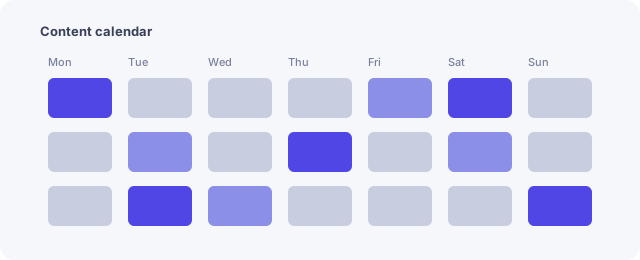
Consistency beats frequency
A channel publishing every second week for a year builds a habit in its audience. One publishing three times in a fortnight and then nothing for two months does not, and the gaps undo much of what the bursts achieved.
Mix formats to protect the schedule. A month made entirely of demanding productions has no slack, so a single problem pushes everything. Alternating heavier and lighter formats keeps output steady without pretending capacity is larger than it is. Series structure is covered in content series planning, and shorter formats in shorts planning.
Common questions
How far ahead should the calendar run?
Two months in detail, six in outline. Detailed plans further out are usually rewritten before use.
Is a fixed publishing day important?
It helps the audience form a habit and helps the team plan. The specific day matters much less than keeping it.
What if a video is not ready?
Publish the next ready thing or skip the slot. Rushing a video to hold a date usually costs more than the missed slot.
Should shorts share the same calendar?
Track them separately but visibly, since they draw on the same people and the same hours. See the FAQ.
How should guests be scheduled?
Book them well ahead and treat their date as fixed, then build the surrounding slots around it. Guest dependencies are the most common cause of a month collapsing.
Does the calendar need to be shared publicly?
No. Announcing a schedule you may not keep creates an obligation with no benefit; keeping it consistently is what the audience actually notices.
Related guides
More on this topic from the same section: