Follower count is the number everyone watches and the one that explains least. Sensible instagram growth tracking keeps a small set of measures that respond to work you control, and reviews them slowly enough that normal variation is not mistaken for a trend.
Growth is a direction, not a week
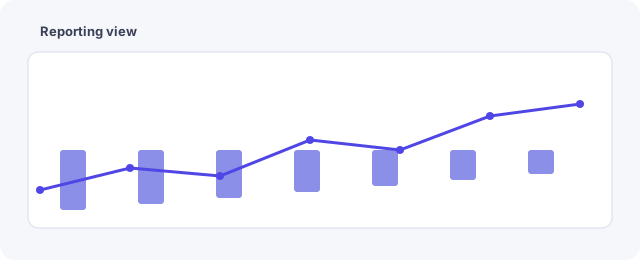
Weekly readings on most accounts are noise. A single post reaching an unusual audience can move a week's figures entirely, and nothing about the underlying account has changed. Reviewing over three or four periods filters that out and shows the direction, which is the only part you can act on.
Separate additions from net change. An account gaining and losing large numbers is telling you something quite different from one gaining steadily, even when the net figure is identical. The second is building an audience; the first is renting one.
What to track
- Net follower change per period, alongside gross additions.
- Profile visits, which reflect discovery rather than existing audience.
- Link taps, where a destination exists.
- Saves and shares per post, normalised for reach.
- Share of reach from non-followers, if available.
- Published count versus planned count, since output drives everything else.
Output belongs on the list. When growth stalls, the cause is frequently that publishing quietly halved two months earlier, and no metric about the audience will reveal that.
Vanity is not the problem — misuse is
Follower count is not useless; it is simply a lagging, coarse measure that responds to many things at once. Used as one input among several it is fine. Used as the only target, it pushes teams toward whatever inflates it fastest, which is rarely what serves the account.
Never present a metric as evidence for a decision it cannot support. Reach cannot tell you whether people valued the content; saves and shares get closer. Being explicit about what each number can and cannot show keeps the review honest. The reporting format sits in the monthly report template, and the per-post view in engagement tracking.
Common questions
How often should growth be reviewed?
Monthly, against a fixed window. More frequent review mostly generates reactions to variation.
Is a follower drop a problem?
Not necessarily. Periodic clean-ups and disengaged accounts leaving are normal, and a smaller engaged audience is worth more than a larger indifferent one.
What should be tracked when an account is new?
Output and reach source. With a small base, engagement ratios swing wildly on single posts, and reading them as signal will send a new account chasing noise.
Should targets be set on follower count?
Prefer targets on output and quality, which the team controls. See the services page for available categories.
Related guides
More on this topic from the same section: