An audit is not a redesign. The point of an instagram profile audit is to write down what the account currently is, so decisions afterwards are based on observation instead of memory. Most accounts drift: a bio written two years ago, highlights that describe a discontinued product, a posting rhythm nobody chose deliberately. A structured pass surfaces that drift in about an hour.
What an audit actually covers
Work in a fixed order so nothing is skipped. Start with the fields a visitor sees before scrolling: profile name, handle, bio text, link destination, category label and profile image. These carry most of the first-impression weight and are the cheapest to change.
Then move to structure — highlight covers and their titles, pinned posts, and whether the first nine grid positions communicate what the account is for. Only after that look at content formats and numbers. Reversing this order tends to produce metric commentary with no actionable change attached.
The checklist
- Does the handle match the name used on other platforms and on the website?
- Does the bio state who the account is for, not only what the brand sells?
- Is the link destination live, and does it match the current campaign?
- Do highlight titles describe current offers, or historical ones?
- Do the first nine grid tiles read as a coherent set?
- Which formats were published in the last 30 days, and in what ratio?
- Which three posts drew the most saves and shares, and what did they have in common?
- Are there unanswered comments or message requests older than a week?
- Is every claim in the bio and pinned content still accurate?
Turning findings into work
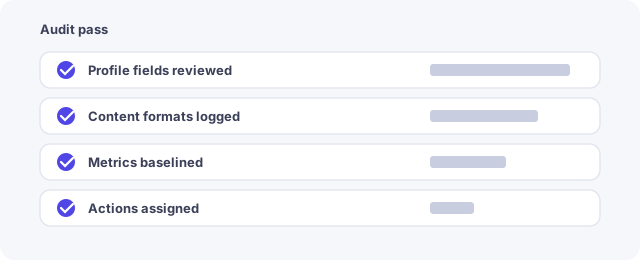
An audit that ends in a document changes nothing. Convert each finding into a single, assignable task with a named owner and a date. Group them into three buckets: fix now (broken links, inaccurate claims), fix this month (bio rewrite, highlight rebuild), and watch (format ratios, response times). Anything that cannot be phrased as a task is an observation, and belongs in a separate note.
When you are ready to schedule the resulting work, the content calendar workflow covers how those tasks become published posts. If the audit shows the profile itself is the weak point rather than the content, start with bio and profile fields instead.
Common questions
How often should this run?
Quarterly suits most accounts. Run it sooner after a rebrand, a pricing change, or a campaign that shifted the audience noticeably.
Do I need external tools?
No. Everything on the checklist is visible in the app and in the built-in insights. Tools help with trending over time, not with the audit itself.
What if the account is new?
Run the profile-field half only. There is not yet enough published content for format ratios or engagement patterns to mean anything. Questions about which SmmDad services fit a new account are covered on the services page and in the FAQ.
Related guides
More on this topic from the same section: