Short video fails on throughput, not on ideas. Effective instagram reels planning exists to move a concept from someone's notes to a published post without the two-week stall that happens when every reel is treated as a bespoke project.
Separate capture from production
Keep one running list of ideas that anyone can add to, with no quality bar. Ideas are cheap and unreliable at the moment they occur; filtering them as they arrive discards good ones and slows the flow. Filtering happens later, in batch, against the month's themes.
Production is the opposite: scheduled, batched, and constrained. Shooting six reels in one session costs far less per reel than six separate sessions, because the setup, lighting and mental context are paid for once. Teams that shoot ad hoc usually publish less, not more.
The pipeline
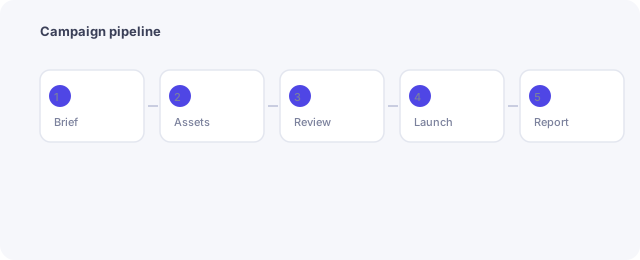
- Capture: an always-open list, no filtering, no format decided yet.
- Select: choose the batch against this cycle's themes, not by personal preference.
- Hook: write the opening line first — if it does not work written down, filming will not save it.
- Shot list: note what must be on screen, so filming is not improvised.
- Batch shoot: one session, multiple reels, consistent setup.
- Edit: caption text, on-screen text and cover frame chosen deliberately.
- Review: one reviewer, one pass, against the brief rather than personal taste.
- Publish and log: record what shipped and the cover used.
Covers and context
The cover frame is chosen at edit time, not left to the default. It determines how the reel reads inside the grid, and a grid full of arbitrary frames undoes deliberate visual work elsewhere. Choose it as part of the edit and record which one was used.
Assume no prior context. Many viewers arrive without having seen anything else from the account, so a reel that depends on a previous post loses them in the first second. Self-contained does not mean shallow; it means the first line establishes what this is about. Wider scheduling sits in the content calendar workflow, and cover-frame consistency in the visual consistency guide.
Common questions
How long should a reel be?
As long as the idea needs and no longer. Padding to reach a duration is the most common reason viewers leave partway.
Does audio choice matter?
It affects discovery, but a reel built entirely around a sound with nothing to say ages badly. Treat audio as support for the idea.
How many reels per week?
Whatever the batch process reliably produces. A sustainable two beats an aspirational five that stops after a fortnight. See the services page for available categories.
Should older reels be deleted if they underperform?
Rarely. Short video can be discovered long after publishing, and a reel that looked flat in its first week sometimes accumulates steadily. Delete for accuracy, not for performance.
Who should review before publishing?
One person, checking against the brief rather than taste. Multi-reviewer passes on short video usually produce compromise edits that lose the specific angle that made the idea worth filming.
Related guides
More on this topic from the same section: