Reels planning fails in a specific way: the calendar shows publishing dates but not filming dates, so every week begins with nothing shot. A reels content calendar that works marks both, and treats the filming day as the real commitment.
Plan around the shoot
Publishing is cheap; filming is not. Fix one or two batch days per month and build the schedule around them, rather than scheduling publications and hoping filming happens. This single change is usually the difference between a calendar that holds and one that quietly empties.
Batch days also improve quality. Setting up lighting and framing once produces more consistent output than six separate attempts, and the videos in a batch tend to be better because momentum builds within the session.
The working cycle
- Agree the month's themes and video count before anything is scheduled.
- Fix batch filming days and treat them as immovable.
- Write hooks for the whole batch before the shoot.
- Publish across the month rather than clustering after a shoot.
- Keep one slot free for anything timely.
- Review published against planned at month end.
- Adjust the count down when the gap repeats.
Balance the formats
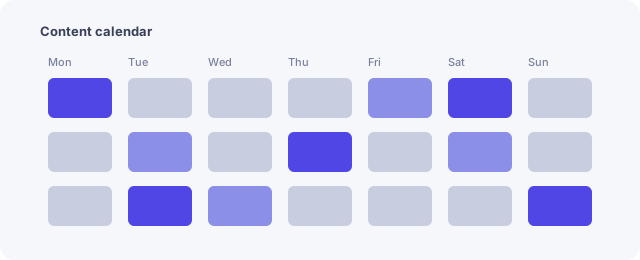
A month made entirely of the most demanding format has no slack, so one disruption empties the schedule. Mixing heavier and lighter formats keeps output steady without pretending capacity is larger than it is.
Track which formats consistently ship late. That usually indicates either a thin brief or a format too expensive for the current team, and both are fixable once the pattern is visible rather than felt. Production detail sits in the short form video content workflow, and measurement in reels performance tracking.
Common questions
How far ahead should the calendar run?
One month in detail, one in outline. Short video ages quickly and detailed plans further out get rewritten.
How many batch days per month?
One or two for most teams. More than that and the batching advantage starts to disappear.
Should every slot be filled?
Around eighty per cent. A fully booked calendar cannot respond to anything timely.
What if a batch day is missed?
Reschedule it immediately rather than absorbing the loss. A missed shoot empties several publishing slots at once.
Who owns the calendar?
One named person. Shared ownership of a schedule reliably produces an unmaintained schedule. See the FAQ.
Should hooks be written before or after filming?
Before, always. A hook decided in the edit is chosen from whatever was said, rather than the video being built around a line that works.
Does the calendar need themes?
Themes stop a month becoming whatever was easiest to film. Without them, batch days drift toward the same few comfortable ideas.
Related guides
More on this topic from the same section: