Approval is where agency schedules go to die. A workable agency content approval process puts an internal check before the client sees anything, scopes what the client is actually approving, and states what happens when a deadline passes.
Internal review comes first
Clients should never be the first people to spot a typo, a broken link, or an inaccurate price. Every item passes an internal accuracy and claims check before it leaves the agency, however tight the schedule.
Skipping that step to save a day costs far more in confidence than the day was worth. Clients who repeatedly find basic errors begin reviewing everything in detail, which slows the process permanently.
The process
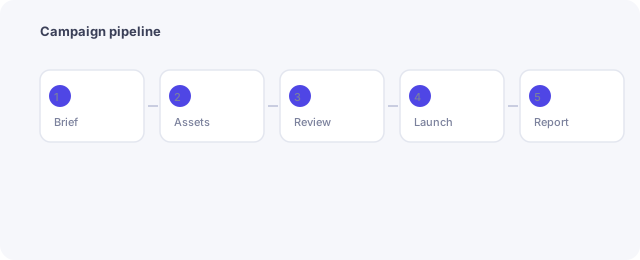
- Draft against a brief, never invented at review time.
- Internal accuracy check: facts, prices, links.
- Internal claims check against the agreed boundary.
- Client review, scoped: what they are and are not deciding.
- Deadline per stage, with a stated default if it passes.
- One consolidated set of client notes, not a trickle.
- A record of who approved what and when.
Scoping the client review matters. A client asked simply to "review" will comment on anything, including things already agreed, and each of those comments costs a round.
Define the default
Decide in the contract what happens when approval does not arrive: the item slips to the next slot, or it publishes as drafted. Both are workable. An undefined default is what produces missed schedules that each side attributes to the other.
Agree how many revision rounds are included. Unlimited revision sounds generous and reliably produces work that never ships, since there is always one more adjustment available. Onboarding sets these expectations in the client onboarding workflow, and the wider process in the agency workflow guide.
Common questions
How many revision rounds should be included?
One substantive round plus corrections suits most retainers. State it in the contract.
Should clients approve every post?
At low volume it works. At higher volume, approve the plan and a sample instead.
What if the client misses deadlines repeatedly?
Apply the default and raise it at the monthly review with the record attached.
Who collects client feedback?
One person on each side. Several stakeholders commenting directly produces contradictions the agency then has to arbitrate.
Should approvals be logged?
Yes. When a question arises later about why something published, the log settles it immediately. See contact.
Should urgent items bypass the process?
There should be a fast path with a named approver, used rarely. Without a legitimate route, urgent work simply bypasses review altogether.
What counts as a correction rather than a revision?
Factual fixes and typos are corrections and should not consume a revision round. Agreeing that distinction up front prevents a familiar argument later.
Related guides
More on this topic from the same section: