The first month decides how the rest of the relationship goes. A structured social media client onboarding workflow front-loads the tedious questions so the team is producing work rather than chasing logins in week three.
Collect access properly, once
Access is the single most common source of early delay. Ask for it as partner or business-level access rather than shared passwords, and confirm it works before the start date rather than on the day work begins.
Never accept a shared login. It defeats access logging, survives staff changes invisibly, and creates a security problem the agency will be blamed for even though the client offered it.
What to gather
- Business-level access to every relevant asset, verified working.
- Brand assets, fonts and any existing guidelines.
- The facts: pricing, availability, service definitions, guarantees.
- Claims boundary — what may never be said, in writing.
- Approval route: who decides, and how fast.
- Escalation contact for anything urgent.
- Existing reporting expectations and their history.
- Known sensitivities, past incidents, competitor topics to avoid.
The claims boundary matters most and is asked for least. Getting it in writing at the start prevents the situation where an agency publishes a reasonable-sounding promise the client cannot actually honour.
Set the approval reality early
Ask directly how quickly the client can approve, and design the schedule around the honest answer rather than the optimistic one. An agency promising weekly publishing to a client whose approvals take five days has designed a failure into the contract.
Agree what happens when approval does not arrive: the item slips, or it publishes by default. Either is workable; leaving it undefined is what produces missed schedules that both sides blame on the other. The ongoing process sits in the agency workflow guide, and sign-off in the content approval process.
Common questions
How long should onboarding take?
One to two weeks for most accounts. Longer usually means access is still outstanding.
Should content start before onboarding finishes?
Only low-risk items. Publishing before the claims boundary is agreed is how early mistakes happen.
What if the client cannot provide facts?
Write down what is unverified and avoid making claims about it. Do not fill the gap with assumptions.
Should there be a kickoff meeting?
Yes, and it should end with a written summary. Verbal agreements about approval speed are remembered differently later.
Who should own the client relationship?
One named person on each side. Diffuse ownership produces contradictory instructions. See contact.
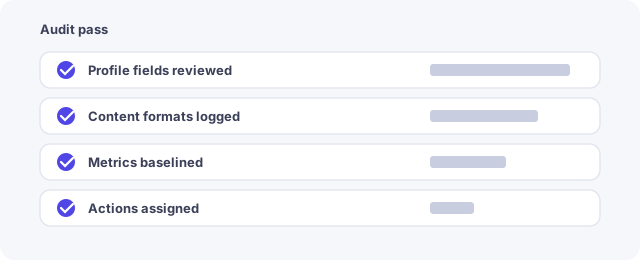
Should onboarding include a content audit?
A brief one. Reviewing what already exists prevents repeating work the client abandoned for reasons they have not thought to mention.
What if the client has no guidelines?
Write a short one during onboarding and have them confirm it. That is faster than discovering their preferences one rejected draft at a time.
Related guides
More on this topic from the same section: