Page audiences are usually described from assumption and rarely checked. Practical facebook audience research uses material the page already receives: the messages, the comments and the reviews.
The inbox is the research
Messages are the most direct statement of intent you will get. Someone taking the trouble to write is telling you exactly what they could not find, could not understand, or did not trust — and each of those is a page improvement waiting to be made.
Log the questions verbatim for a month and group them by underlying need. Repetition is the strongest signal available: a question asked thirty times is not a curiosity, it is a defect in how the business presents itself.
Collecting properly
- Log every question from messages and comments for one month.
- Group by need rather than by wording.
- Read reviews for what people mention unprompted.
- Note the language customers use, in their own words.
- Record which posts prompted the most questions.
- Separate pre-purchase questions from support questions.
- Repeat twice a year, since customer mix changes.
Keeping the customer's own wording matters. Businesses describe their offering in internal vocabulary, and the gap between that and how customers phrase it is often the single most useful finding.
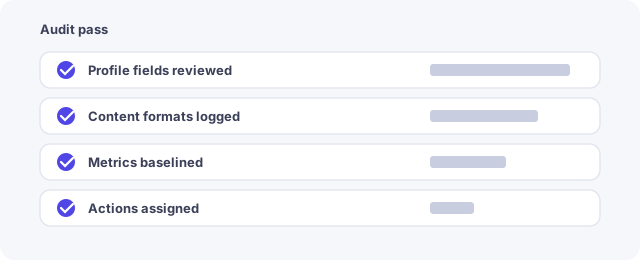
Act on it in two places
Findings belong in the page information as well as in content. If a question keeps recurring, the answer probably belongs in the about section, the pinned post, or the hours and services fields — not only in a post that will scroll away.
Be careful with built-in audience data. It describes who engages, not what they want, and it does not include the people who looked and left without interacting. The qualitative log covers what the numbers cannot. Related routine sits in the page content workflow and the page audit checklist.
Common questions
Are page insights enough?
They cover demographics and activity. They cannot tell you why someone messaged, which is the part that changes decisions.
Should customers be surveyed?
Occasionally, with very few questions. Long surveys get low response rates skewed toward the most engaged.
How many messages are enough to read?
Enough to see repetition, usually a month. Themes emerge well before you have read everything.
What if the audience is not who was intended?
Decide deliberately whether to serve who arrived or change direction. Drifting between the two satisfies neither.
Should reviews be treated as research?
Yes. Unprompted comments in reviews are unusually honest, precisely because nobody asked for them. See the FAQ.
Where should findings be recorded?
Somewhere the content and support teams both read. Research kept in a marketing folder rarely reaches the people answering the same question every day.
Related guides
More on this topic from the same section: