Business pages accumulate stale information faster than most surfaces, because the fields are set once and rarely revisited. A facebook page audit is a scheduled pass over the details customers actually rely on.
Start with the factual fields
Opening hours, address, phone number, website and category are the parts of a page people use to make decisions. An incorrect opening time costs a customer directly, which makes these fields more important than anything about content strategy.
Check them against reality rather than against what you remember setting. These fields are frequently edited by several people over the years, and holiday hours in particular tend to be set once and left.
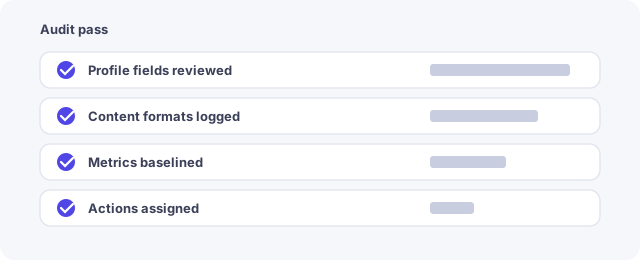
The checklist
- Hours, address, phone and website correct and current.
- Category and services accurate to what is actually offered.
- About text says who the page is for, in the first two lines.
- Pinned post is current, not an announcement from last year.
- Cover image legible on a phone, where most people see it.
- Response time to messages over the last month.
- Unanswered reviews or recommendations.
- Page roles: does the access list match current staff?
- Any automated reply still saying something accurate.
Access is the risk item
Page roles are the most commonly neglected part of an audit and the one with the largest downside. Former staff and former agencies frequently retain access for years, and page access is difficult to recover once genuinely lost.
Review the list, remove anyone who has left, and confirm at least two current people hold full access. A page with a single admin is one departure away from a serious problem. Content routine sits in the page content workflow, and reporting in the page reporting template.
Common questions
How often should a page be audited?
Twice a year, and immediately after any staffing change that touched page access.
Do old posts need cleaning up?
Only where they are inaccurate. Historical posts are rarely seen; wrong information in them still is.
Does the cover image matter?
Modestly. Keep it legible on a phone and avoid text that crops awkwardly at small sizes.
Should automated replies be used?
Only if accurate and followed by a real answer. An auto-reply promising a response nobody sends is worse than none.
Who should run the audit?
Someone with access but not the daily publisher, so stale details still look stale to them. See the services page.
Does the page category matter?
It affects which fields and features are available, so an inherited category set years ago is worth checking against what the business actually does now.
What about duplicate pages?
They are common and they split reviews and followers. Merging where possible is worth the effort, since customers cannot tell which one is current.
Related guides
More on this topic from the same section: