Approval slows content down when nobody has said who decides. A defined meta content approval workflow names one reviewer per stage, sets a deadline, and states what happens when that deadline passes.
One reviewer, one scope
Several people reviewing the same post simultaneously produces contradictory notes and no decision. Give each stage a single named person and a defined scope — accuracy, brand, or claims — so reviewers know what they are checking and what is not theirs.
Scope creep in review is the main cause of slow cycles. A brand reviewer rewriting facts, or a legal reviewer adjusting tone, expands every round and blurs who is actually accountable for the decision.
Stages and rules
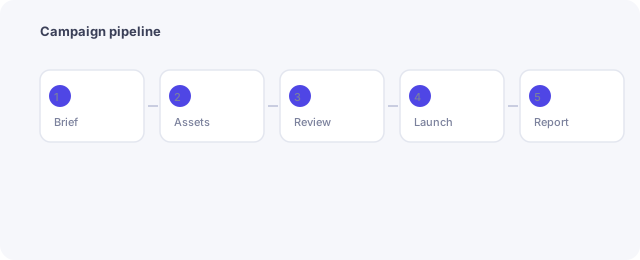
- Draft, written against a brief rather than invented at review time.
- Accuracy: every factual statement supportable.
- Claims: nothing promising a result the business cannot stand behind.
- Brand: voice and visual rules followed.
- Final sign-off: one person, one decision.
- A deadline per stage, with a stated default if it passes.
- An exception path for genuinely urgent items, used rarely.
Define the default explicitly. Whether silence means approved or means the item waits, both are workable; an undefined default is why content sits untouched for a fortnight.
Keep the claims check separate
Bundling claims into a general brand review means it is skipped whenever the reviewer is busy. It deserves a step of its own because it carries genuine consequence: a post promising outcomes the business cannot deliver is a different order of problem from an awkward sentence.
Scale review to reach. A routine page update does not need the scrutiny of a paid campaign that will be seen by a large audience, and applying identical process to both guarantees the process gets bypassed under pressure. Campaign structure sits in the campaign organization guide, and page routine in the page content workflow.
Common questions
How many stages are reasonable?
Two or three. Beyond that, cycle time exceeds the shelf life of anything timely.
What if a reviewer is unavailable?
Name a deputy in advance. Processes depending on one always-available person fail during every holiday.
Should clients approve every post?
Agree scope up front. Per-post approval is workable at low volume and impractical at high volume.
Where should approvals be recorded?
Anywhere durable, as long as who approved what and when is recoverable later.
Does paid content need extra review?
Yes. Money behind a claim raises both the reach and the consequences of getting it wrong. See contact.
Should evergreen content be re-reviewed?
Periodically, yes. A post approved two years ago may now contain pricing, availability or policy details that quietly stopped being true.
Should the workflow differ for organic and paid?
The stages are the same; the depth is not. Paid content reaches an audience that did not choose to follow you, which raises the cost of any inaccuracy.
Related guides
More on this topic from the same section: