Profiles are usually rewritten in one sitting, months apart, with no way of knowing what helped. A slower instagram profile optimization loop changes one element at a time and waits long enough to read the result.
One variable, one window
The profile is a small surface: name field, description, link, highlights, pinned posts. Changing several at once makes the outcome unattributable, and since profile metrics move slowly, you rarely get a second chance to learn from that period.
Give each change a fixed observation window — three to four weeks for most accounts. Shorter windows on low-traffic profiles measure little except which weeks happened to be busy, and acting on that noise usually undoes something that was working.
The loop
- Pick one element and state what you expect to change.
- Record current profile visits and link taps before altering anything.
- Make the change, and note the date.
- Leave it alone for the full window, even if early numbers look poor.
- Compare against the recorded baseline, not against memory.
- Keep, revert, or refine — then start the next single change.
Recording the expectation beforehand is what turns this into a test. Without it, almost any result can be narrated as a success afterwards.
What to expect from the numbers
Profile changes produce modest effects. A better description will not transform an account, and anyone promising that is selling something. What it can do is convert a slightly higher share of the visitors you already receive, which compounds quietly over time.
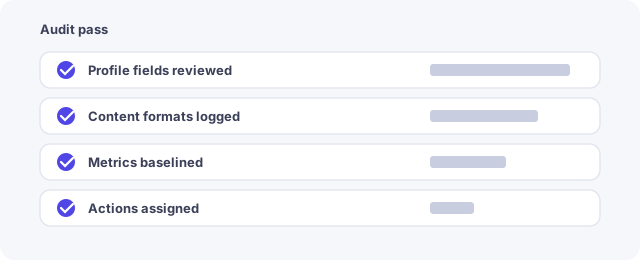
If profile visits are very low, optimisation is the wrong priority — the constraint is discovery, and no amount of bio refinement fixes it. Check that first, then decide where the effort belongs. The one-off structured review is the profile audit checklist, and the field-level detail is in the bio optimization checklist.
Common questions
How long before a change can be judged?
Three to four weeks on most accounts, longer on quiet ones. Judging after a few days measures the days, not the change.
Can two elements be tested at once?
Only with enough traffic to separate them, which most accounts do not have. Sequential testing is slower but readable.
Which element is usually worth testing first?
The link destination, then the first line of the description. Both sit directly on the path a visitor takes, so changes there show up sooner than anything further down the profile.
What if a change makes things worse?
Revert and record it. A documented negative result is genuinely useful, and prevents the same idea returning next year. See about. Keep the log with the profile assets themselves, so whoever inherits the account also inherits the history.
Related guides
More on this topic from the same section: