Replying is easy; replying consistently, at volume, without burning someone out is not. A defined instagram community management routine sets out what gets answered, how quickly, by whom, and what gets passed on.
Triage before responding
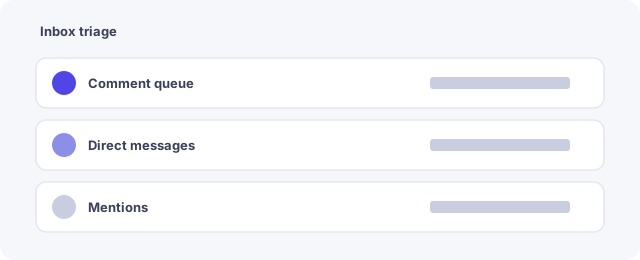
Not everything deserves the same effort. Sort incoming messages into a few types — genuine questions, feedback, complaints, spam, and things needing someone else — and handle each type differently. Without triage, whoever is on the inbox answers in arrival order and the important items wait behind trivia.
Complaints and anything touching money, accounts or safety should leave the inbox immediately and go to a named person. Front-line community staff should never be improvising answers on those, both for the customer's sake and for the responder's.
The routine
- Set a response-time target per type and publish it internally.
- Check the inbox at fixed times rather than continuously.
- Answer genuine questions first; they have the clearest value.
- Escalate anything about billing, accounts, safety or legal matters.
- Hide or remove abuse per a written policy, not per mood.
- Log recurring questions — they are content briefs.
- Close the loop on anything escalated, so nothing silently disappears.
Consistency over speed
A reliable same-day reply is better than an occasional instant one followed by three days of silence. Predictability is what makes an audience willing to ask, and continuous monitoring is the fastest route to an exhausted responder and an inconsistent voice.
Write short standard answers for the questions that repeat, then adapt rather than paste. Wholly templated replies are recognisable and make people feel processed, but a starting point saves real time and keeps facts accurate. The tone boundaries belong in the brand voice guide, and recurring questions feed audience research.
Common questions
Should every comment get a reply?
Every question should. Replying to each single-word comment adds little and consumes the time that questions deserve.
How should criticism be handled?
Publicly and briefly, then privately if it needs detail. Deleting reasonable criticism reliably makes it larger, and other readers usually notice the removal before they would have noticed the original complaint.
How should repeated identical questions be handled?
Answer them, then fix the cause. A question asked twenty times is usually telling you that something on the profile, in the pricing or in the content is unclear.
Who should staff the inbox?
Someone with context and the authority to answer. An inbox staffed by people who can only collect questions frustrates everyone. See contact. Give the responder a short list of things they may answer outright, and a clear route for everything else. That list is worth revisiting every few months, because the questions people ask shift as the account and the product change.
Related guides
More on this topic from the same section: