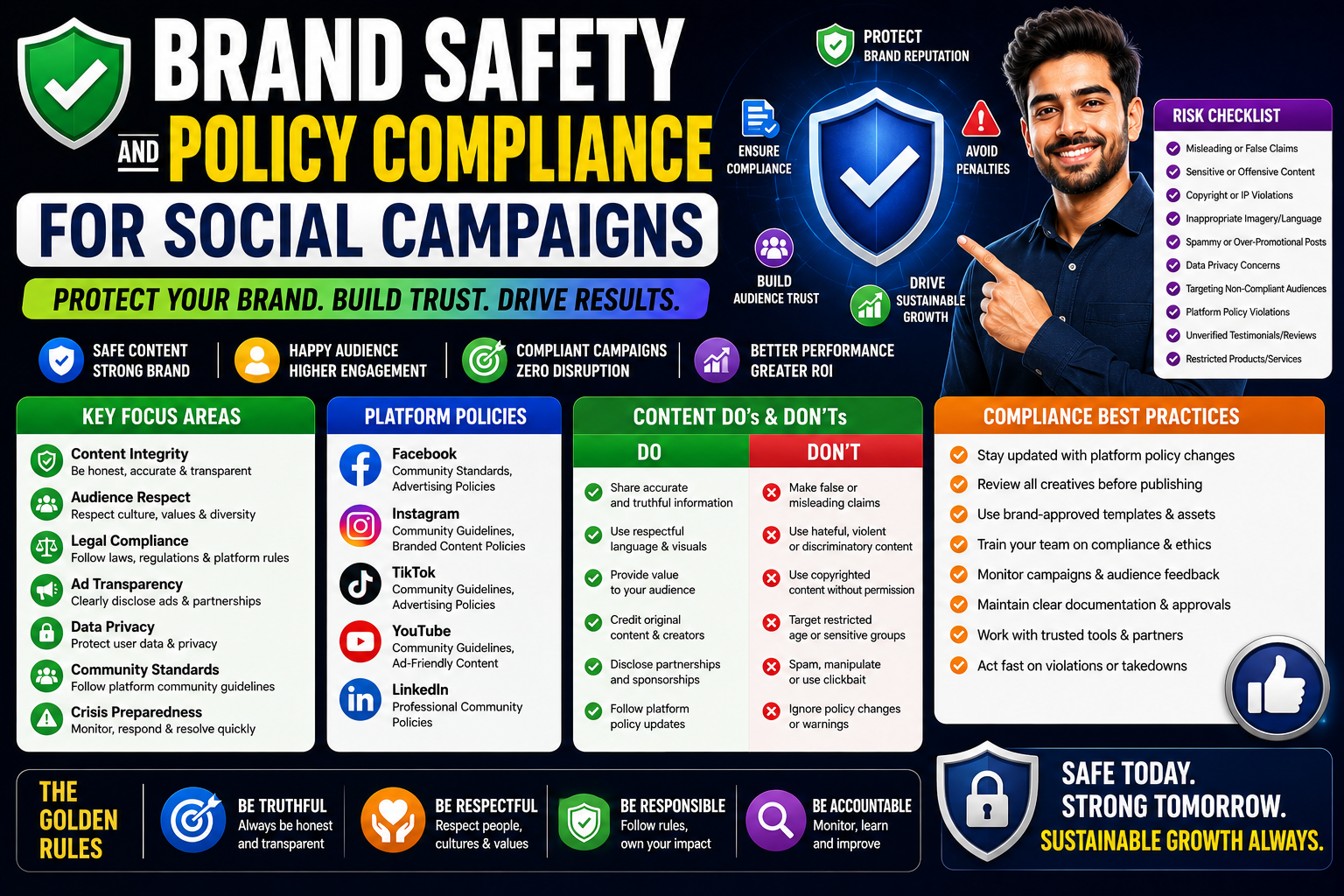
Brand safety is usually treated as a legal formality until something goes wrong in public. In practice it is an operating habit: knowing where your content can appear, what each platform's rules actually say, and who decides when something is borderline.
Read the rules that apply to you
Every platform publishes advertising and community policies, and they differ more than people expect. A claim that passes on one network can be rejected on another, and rules covering health, finance, and anything aimed at minors are stricter and change more often. Read the policies for the platforms you actually use, and re-read them when you launch a new category of content.
Note the difference between what is prohibited and what is merely restricted. Restricted categories often stay available with extra requirements — verification, disclosures, or age gating. Teams that treat "restricted" as "banned" leave workable options unused, and teams that treat it as "allowed" get caught out.
Decide placement deliberately
Where an ad appears matters as much as what it says. Broad automatic placements reach further and cost less per impression, but they also put your brand next to content you have not seen. Exclusion lists and category controls exist for this, and reviewing them once a quarter is enough for most advertisers.
- Keep an exclusion list and a written reason for each entry.
- Check placement reports for the surfaces that actually delivered.
- Agree in advance who can approve a borderline placement.
- Record the decision, so the next person does not relitigate it.
Disclosure is not optional
Paid partnerships, affiliate links and gifted products all require clear disclosure in most markets, and the requirement sits with the brand as well as the creator. Put the disclosure in the brief rather than hoping the creator adds it, and check the published post rather than assuming.
What to do when something slips through
Have a written response before you need one: who is contacted, who can pause spend, how quickly a takedown request goes out, and what is said publicly. The cost of an incident is driven far more by the response time than by the original mistake.
Keep a short record of every incident and what changed afterwards. Most repeat problems come from a gap nobody documented the first time.
Common questions
How often should policies be reviewed?
Quarterly for the platforms you use most, and immediately before entering a new content category or market.
Who should own brand safety?
One named person, with the authority to pause spend. Shared ownership reliably means nobody acts during the hour it matters.
Do exclusion lists hurt performance?
They narrow reach, which can raise costs. That is a trade to make deliberately rather than by default in either direction.
Is a compliance checklist enough?
It catches the routine cases. Judgement calls still need a person, which is why the escalation path matters more than the checklist length.
Join the discussion
Share your question, feedback, or experience with this guide.
Login required
Please login to like this post or join the discussion.
No comments yet. Be the first to comment.