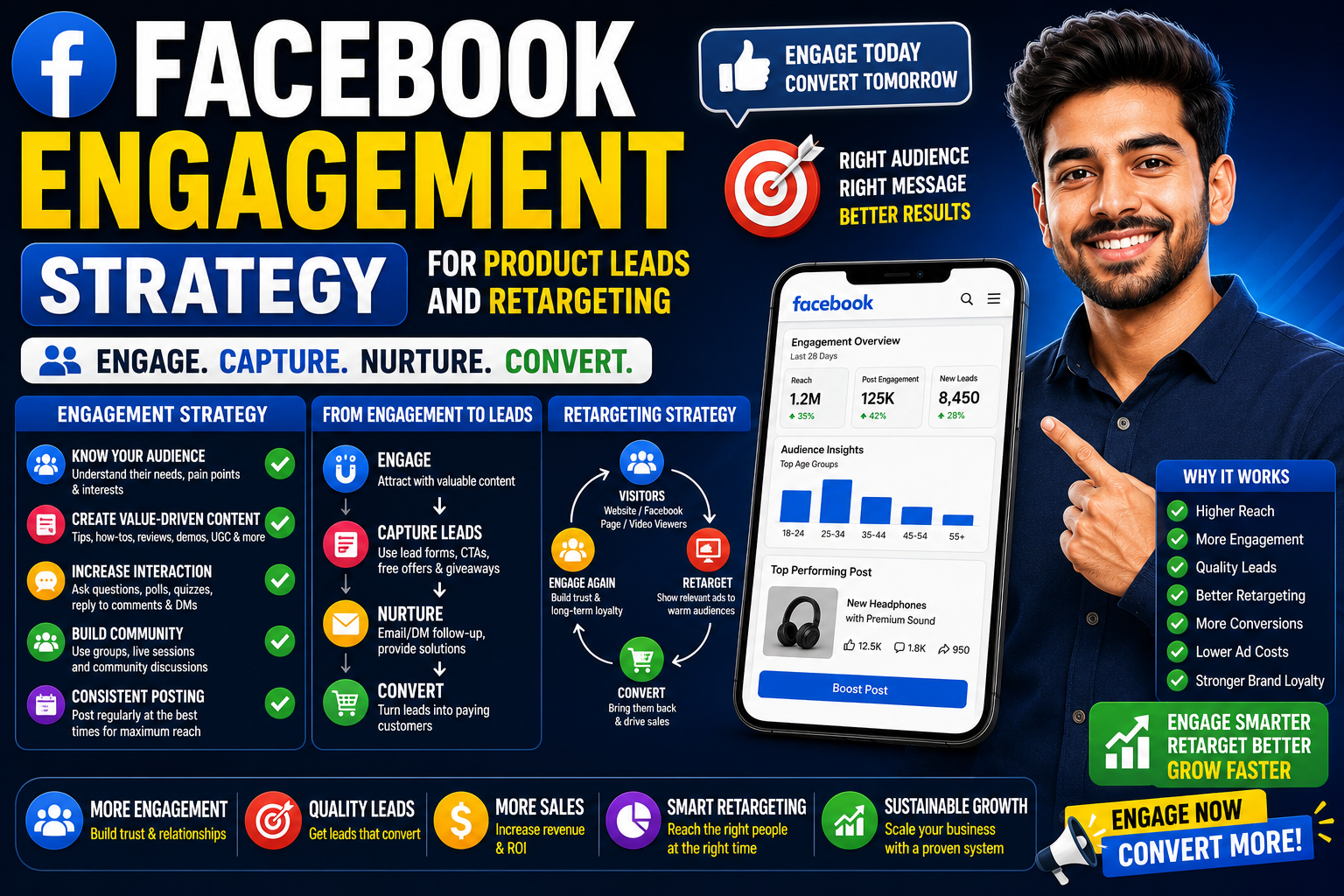
Facebook still works for lead generation, but rarely in the way it is described. Engagement on a page is not the goal; it is a signal you can use to reach people again more cheaply and with a more specific message.
Engagement is an audience-building step
Every meaningful interaction — a video watched past a threshold, a post engaged with, a form opened — identifies someone with more interest than a cold viewer. That is the value. Treating engagement as the outcome leads to content designed to provoke reactions, which builds an audience with no intent to buy.
Post things that surface genuine interest: how the work is done, what a project involves, what people get wrong before they call. These attract fewer reactions and better ones.
Structure the retargeting properly
- Separate cold, engaged and existing-customer audiences.
- Set a window that matches your buying cycle, not a default.
- Exclude people who already converted, from every prospecting campaign.
- Vary the message by stage — the second message should not repeat the first.
- Cap frequency; repetition past a point produces irritation, not recall.
The exclusion step is skipped most often and costs the most. Paying repeatedly to reach people who already bought is a quiet, steady waste.
Match the offer to the stage
Someone who watched thirty seconds of a video is not ready for the same message as someone who opened a pricing page. Early stages should ask for attention; later stages can ask for contact details. Asking for a decision too early raises cost per lead and, worse, teaches you the wrong lesson about the audience.
Write for the stage, not for the platform
The same offer needs different words at different stages. Cold audiences need the problem named before the solution means anything; engaged audiences already accept the problem and want to know why you specifically. Reusing one message everywhere makes the cold audience confused and the warm one bored.
Keep the creative count small enough to read the results. Twenty variants across three audiences produces numbers too thin to act on.
Measure leads, not lead forms
Form submissions are easy to increase and easy to fill with people who will never respond. Track what happens after: contact rate, qualified rate, and eventually revenue. A campaign with fewer, better leads regularly beats one with a lower cost per form.
Record the numbers monthly in one place. Most retargeting decisions are made on impressions of performance rather than on a record, and impressions favour whatever ran most recently.
Common questions
How large should a retargeting audience be?
Large enough to deliver without exhausting itself in days. If it burns out quickly, widen the window or the source event.
How long should the window be?
Roughly your buying cycle. Long windows for considered purchases, short ones for impulse.
Is boosting posts worth it?
For reach on something already working, sometimes. As a strategy on its own, it lacks the controls that make retargeting effective.
Why did cost per lead rise?
Usually audience fatigue or an audience too small for the budget. Check frequency before changing the creative.
Join the discussion
Share your question, feedback, or experience with this guide.
Login required
Please login to like this post or join the discussion.
No comments yet. Be the first to comment.